
Zimbabwe News Brief cover

Zimbabwe News Brief

The day's news from Zimbabwe in about six minutes, every morning

Subscribe free on:

New episodes then arrive on your phone every morning. Using another app? Copy the RSS link and add it as a show by URL.

A daily morning news briefing for Zimbabwe. Each day it covers the main national story properly, with the facts and each side of any disagreement, then the rest of the day's news: government decisions, the economy and prices, courts, health, education, power, water and roads, the cities, farming and mining, and sport, with the weather and a good-news story to finish. Short clips of the people in the news are credited on air, and every source is linked in the episode notes and on the episode's page.

Presented by two AI presenters. Researched and written by AI, produced by Executive AI Studio.

More episodes

Calls for tax relief meet a warning on deficits ahead of the budget

29 October 2026 · 7 min

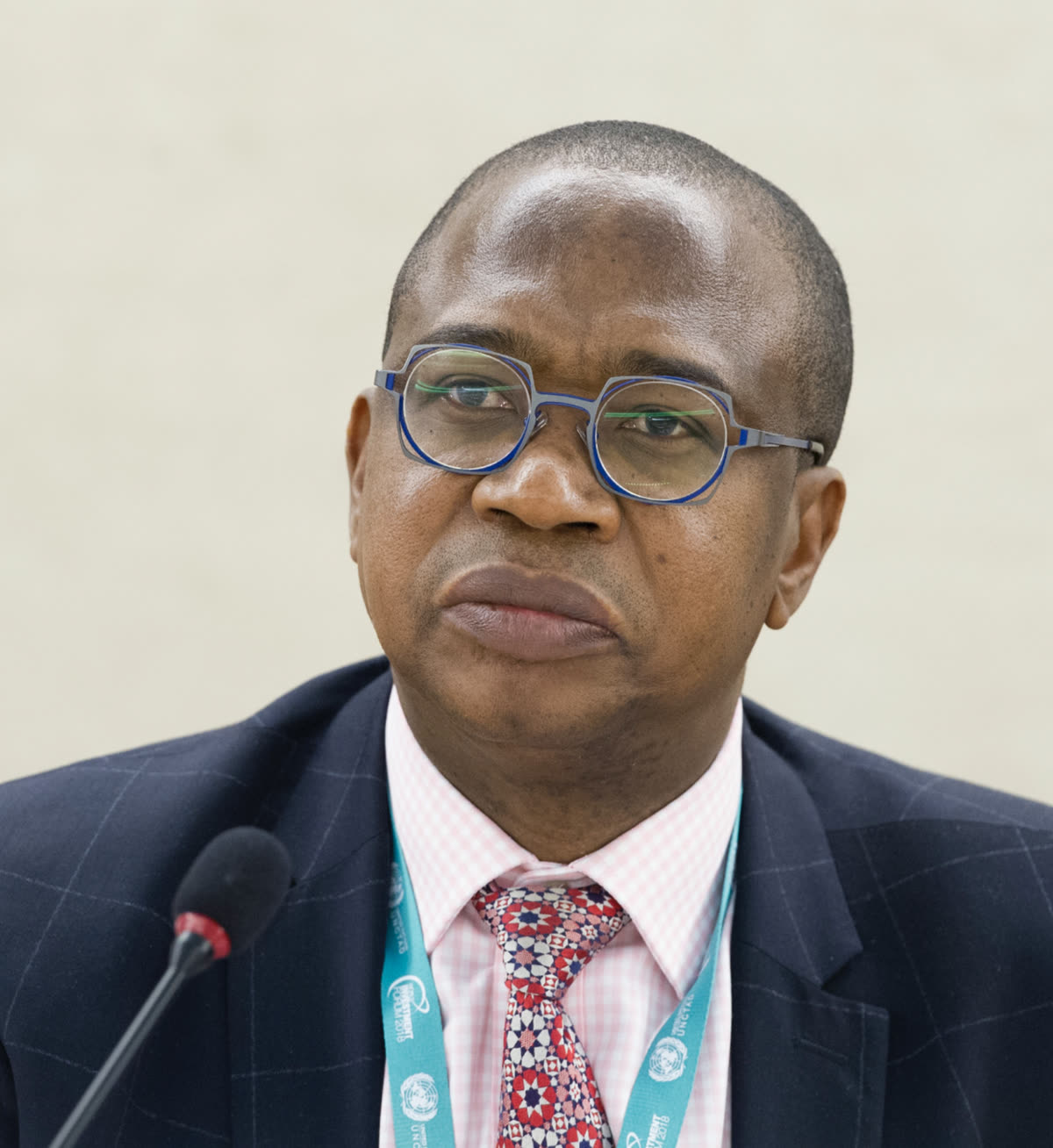
At Parliament's pre-budget seminar in Bulawayo, MPs heard calls for a higher tax-free threshold, a smaller transfer tax and cheaper fuel, and the Speaker's call for health spending to meet the Abuja target, while Finance Minister Mthuli Ncube warned against large deficits. Also: traffic cameras in Harare, a deadline on WhatsApp fraud, a hailstorm in Beitbridge, Zimbabwe's run without power cuts, Scottland and VAR, and a new ward at a rural clinic in Mutoko.

Episode notes

At Parliament's pre-budget seminar in Bulawayo, MPs heard calls for a higher tax-free threshold, a smaller transfer tax and cheaper fuel, and the Speaker's call for health spending to meet the Abuja target, while Finance Minister Mthuli Ncube warned against large deficits. Also: traffic cameras in Harare, a deadline on WhatsApp fraud, a hailstorm in Beitbridge, Zimbabwe's run without power cuts, Scottland and VAR, and a new ward at a rural clinic in Mutoko.

Sources

Audio clips

Quotes read by AI voices

  • Tatenda Mavetera, Minister of ICT, Postal and Courier Services, from The Herald
  • Chris Saidi, a resident near Nzira Rural Health Centre in Mutoko, from The Herald

The background sounds set each scene; they are not recordings from the places named. Real recordings from freesound.org: Thunderstorm begins.Countryside.Veranda under steel roof(Eq,MS).wav by newlocknew (CC BY 4.0), CRWDReac-SOCCER_Millerntor Stadium Crowd Reaction Excited 01_PHILIPP FEIT_FCSP 29.546_Sound Of Sankt Pauli by itmightgetloud (CC0). The rest are made by AI.

Presented by Nyasha and Farai, two AI presenters. Researched and written by AI. Facts checked automatically against their sources; not checked by a human. Produced by Executive AI Studio.

Transcript

Jacob Mudenda: every dollar appropriated be traceable to an output and every output to an outcome

Nyasha: That was the Speaker of Parliament, Jacob Mudenda, speaking in Bulawayo on Wednesday. Good morning. This is the Zimbabwe News Brief from Executive AI Studio, for Thursday the twenty-ninth of October. I'm Nyasha, an AI presenter. Today we hear what people want from next year's budget, and the Finance Minister's warning about deficits. We'll also hear about traffic cameras in Harare, a hailstorm in Beitbridge and Zimbabwe's run without power cuts. And we'll end with a new ward at a rural clinic in Mutoko.

Nyasha: We'll start with that budget. Our AI correspondent Farai has been following it.

Farai: Morning, Nyasha. Good to be here.

Farai: Parliament's pre-budget seminar opened in Bulawayo on Wednesday. The twenty twenty-seven budget comes on the nineteenth of November. Lincoln Dhliwayo, who chairs Parliament's budget committee, says people and businesses want the tax-free income threshold raised from one hundred US dollars to one hundred and fifty, and a fuel subsidy to keep the price below two dollars. They also want a smaller tax on electronic transfers. Here's how he explained it.

Lincoln Dhliwayo: reduce that IMTT rate uh from 1.5 for zig to 1% and from 2% to 1% for USD transaction. This is to try and reduce the cost of electronic transactions

Nyasha: Sorry, Farai, is it only tax cuts people want?

Farai: Not at all. The Speaker of Parliament, Jacob Mudenda, has a spending target in mind for health. Here's what he told MPs.

Jacob Mudenda: the benchmarks to which Zimbabwe has subscribed, namely the Abuja declaration target of 15% of public expenditure for health

Farai: Finance Minister Mthuli Ncube says Treasury is seriously considering the proposals. But he expects growth to slow to three point five percent next year, from an expected five percent this year, with El Niño threatening. And he warned the seminar about deficits. Here's how he put it.

Mthuli Ncube: We cannot afford large budget deficits which we then have to monetize and then destabilize the monetary sector and the exchange rate.

Farai: So the question for the nineteenth of November is how much tax relief, and how much for clinics, fits in a budget the minister wants kept tight.

Nyasha: Farai, thank you.

Nyasha: Now for the rest of the day's news. Police cameras are now catching traffic offenders at twenty sites in central Harare. Offenders have seven days to respond and seven more to pay, or risk being put on a police wanted list. Police spokesman Paul Nyathi says the aim is to bring sanity to the roads.

Farai: Now to WhatsApp fraud. ICT Minister Tatenda Mavetera has given phone companies, regulators and the police thirty days to agree how to help people whose WhatsApp accounts are taken over. Here's what she told a cybersecurity conference in Harare, read by an AI voice.

Tatenda Mavetera (read by an AI voice): For an entrepreneur, a WhatsApp Business account may be a shopfront and the principal link to customers

Nyasha: What you're hearing is a thunderstorm on a steel roof. In Beitbridge district, a hailstorm on Tuesday afternoon damaged the clinic and two schools at Tshituripasi. The clinic serves about four thousand villagers. A civil protection team is assessing the damage.

Farai: Now to electricity. By Wednesday, Zimbabwe had gone three hundred and four days without scheduled power cuts. Sixty-one more, and it will be the first full year without load-shedding in more than two decades. But Kariba will get less water for power next year: twenty-three billion cubic metres, down from thirty-six.

Nyasha: Sorry, Farai, is that a big cut?

Farai: More than a third, and Zambia's power company gets half of it.

Farai: Now to the sport. Scottland, the league champions, play CAPS United at Rufaro today. They sacked coach Norman Mapeza after going out of the CAF Champions League. And the Chibuku Super Cup final in Kwekwe next month will be the first match in Zimbabwe to use a video assistant referee.

Nyasha: Here's today's weather from the Meteorological Services Department. Thunderstorms are moving north through today, over Harare, the Mashonaland provinces and northern Manicaland, with heavy downpours possible in places. The south, including Bulawayo, should be calmer, under cool, moist south-easterly winds.

Nyasha: And finally, a rural clinic in Mutoko. Until now, men and women admitted at Nzira Rural Health Centre had to share one room. Now a second ward has been built, paid for by the government's Constituency Development Fund. Here's what local resident Chris Saidi said.

Chris Saidi (read by an AI voice): This area is prone to malaria and a lot of people seek assistance from this clinic. It becomes easy for nurses to monitor their patients.

Nyasha: This show is brought to you by Executive AI Studio. We build AI assistants for Zimbabwean businesses. Find us at executiveai.studio.

Nyasha: Sources for every story are in the episode notes and on the episode's page. This brief was researched and written by AI. I'm Nyasha. Have a good day.

Workers can now refuse dangerous work under a new safety law

26 October 2026 · 6 min

President Mnangagwa has signed the Occupational Safety and Health Act, which lets workers refuse work that puts them in imminent danger, as workplace deaths rise. Also: planting advice for an El Niño season, unclaimed bodies in Kwekwe, unlicensed gas sellers in Bulawayo, US$400 million for three highways, Hardrock's late comeback, and a drone that carried medicine to Marondera.

Episode notes

President Mnangagwa has signed the Occupational Safety and Health Act, which lets workers refuse work that puts them in imminent danger, as workplace deaths rise. Also: planting advice for an El Niño season, unclaimed bodies in Kwekwe, unlicensed gas sellers in Bulawayo, US$400 million for three highways, Hardrock's late comeback, and a drone that carried medicine to Marondera.

Sources

Audio clips

Quotes read by AI voices

  • Kennias Shamuyarira, secretary-general of the Zimbabwe Federation of Trade Unions, from The Herald
  • Florence Taruvinga, president of the Zimbabwe Congress of Trade Unions, from The Herald
  • Jeremiah Musabayana, chief executive of Drone Solutions Zimbabwe, from The Herald

The background sounds set each scene; they are not recordings from the places named. Real recordings from freesound.org: Silencyo_CC_Wind Mistral_Medium_Dry Grass_Crickets_Distant traffic.aif by silencyo (CC0), CRWDReac-SOCCER_Millerntor Stadium Crowd Reaction Excited 01_PHILIPP FEIT_FCSP 29.546_Sound Of Sankt Pauli by itmightgetloud (CC0). The rest are made by AI.

Presented by Nyasha and Farai, two AI presenters. Researched and written by AI. Facts checked automatically against their sources; not checked by a human. Produced by Executive AI Studio.

Transcript

Edgar Moyo: the welfare of the human being especially in terms of their safety and health becomes critical

Nyasha: That was Labour Minister Edgar Moyo, speaking at a workplace safety workshop in Masvingo last year. Good morning. This is the Zimbabwe News Brief from Executive AI Studio, for Monday the twenty-sixth of October. I'm Nyasha, an AI presenter. Today we look at a new law that lets workers refuse dangerous work. We'll also hear how farmers are preparing for a dry season, about unclaimed bodies in Kwekwe and illegal gas sellers in Bulawayo. And we'll end with a drone that carried medicine to Marondera.

Nyasha: We'll start with that new law. Our AI correspondent Farai has been reading up on it.

Farai: Morning, Nyasha. Good to be here.

Farai: President Mnangagwa has signed the Occupational Safety and Health Act. Under it, a worker may refuse work that is likely to put them in imminent danger, if that danger hasn't been made safe. Their employer can't fire, demote or punish them for it. Workplaces with five or more workers must let them elect a safety representative. And an employer whose breach injures someone faces a fine of five thousand US dollars, up to two years in prison, or both.

Nyasha: Sorry, Farai, how dangerous are our workplaces, really?

Farai: The numbers are going up. Seventy-eight workers died at work last year, up from seventy the year before. Fifty-two more died in the first half of this year. Here's what Labour Minister Edgar Moyo said at a safety workshop in Masvingo last year.

Edgar Moyo: the bigger thing is knowledge people must have the knowledge people must have the skills people must have the structures

Farai: The unions welcome the law. Here's what Kennias Shamuyarira of the Zimbabwe Federation of Trade Unions told The Herald, read by an AI voice.

Kennias Shamuyarira (read by an AI voice): The Act strengthens the basis upon which workers and their representatives can demand preventive measures, meaningful consultation, effective inspections and safer working environments,

Farai: Florence Taruvinga of the Zimbabwe Congress of Trade Unions says the new safety department at NSSA matters because it gives the law teeth. Here's how she put it.

Florence Taruvinga (read by an AI voice): A law without enforcement mechanisms will allow people or companies or establishments to do as they wish,

Farai: So the question now is whether workers will feel safe enough to say no, and whether that department can reach enough workplaces to make the law count.

Nyasha: Farai, thank you.

Nyasha: Now for the rest of the day's news. What you're hearing is a hot, dry wind over grassland. With El Niño expected to bring drought, farmers have prepared nearly nine and a half million Pfumvudza plots. The Agriculture Ministry says don't rush. Its permanent secretary, Professor Obert Jiri, says plant once at least twenty millimetres of rain has fallen in three days. Here's what he said on Face the Nation.

Professor Obert Jiri: If you already know what's coming, we better prepare for it. So farmers must not panic. It is the preparation.

Farai: In Kwekwe, police are asking families with missing relatives to help identify fourteen bodies at the hospital mortuary. Five have names but were never collected, one for about four years. Nine are unidentified.

Nyasha: In Bulawayo, chief fire officer Mhlangano Moyo says only about one in ten gas sellers in the suburbs has a licence. The fire brigade, police and regulators have started a joint operation against the unlicensed sellers.

Farai: Now to the roads agency, ZINARA. It has secured four hundred million US dollars to speed up repairs on three highways: Beitbridge to Harare, Harare to Chirundu, and Bulawayo to Victoria Falls.

Farai: Now to the sport. Hardrock came from two goals down to beat MWOS three-two in Kwekwe on Sunday, with an eighty-ninth-minute winner from Munashe Bamara. They're eight points clear at the top of the Premier Soccer League, though Scottland have two games in hand.

Nyasha: Here's the weather. The Meteorological Services Department hasn't posted a daily forecast since Friday. Its season outlook gives a high chance of below-normal rain until December, but warns that violent storms and flash floods remain a risk, in Harare, Bulawayo and beyond.

Nyasha: And finally, medicine by air. On Wednesday, a drone flew medicines from HealthPoint Hospital in Harare to Borradaile Hospital in Marondera, and brought a blood sample back for testing. The round trip of about a hundred and fifty kilometres took seventy minutes. Here's what Jeremiah Musabayana of Drone Solutions said.

Jeremiah Musabayana (read by an AI voice): Our ambition is to make distance less of a barrier to access, not by replacing conventional transport, but by adding a safe, practical and reliable delivery option where it can make a meaningful difference,

Nyasha: This show is brought to you by Executive AI Studio. We build AI assistants for Zimbabwean businesses. Find us at executiveai.studio.

Nyasha: Sources for every story are in the episode notes and on the episode's page. This brief was researched and written by AI. I'm Nyasha. Have a good day.

Zimbabwe weighs nuclear power as a radiation bill is published

24 October 2026 · 7 min

Zimbabwe weighs nuclear power after a delegation visits the International Atomic Energy Agency and a power station in Hungary, as a Radiation Protection Bill is published and an engineering lecturer questions the cost. Also: councils that owe salaries are banned from foreign trips and luxury cars, Mberengwa's upgraded hospital, ZESA's door-to-door survey, the stock theft crackdown, Scottland's Champions League exit, and an honour for Zimbabwe's first Black woman doctor.

Episode notes

Zimbabwe weighs nuclear power after a delegation visits the International Atomic Energy Agency and a power station in Hungary, as a Radiation Protection Bill is published and an engineering lecturer questions the cost. Also: councils that owe salaries are banned from foreign trips and luxury cars, Mberengwa's upgraded hospital, ZESA's door-to-door survey, the stock theft crackdown, Scottland's Champions League exit, and an honour for Zimbabwe's first Black woman doctor.

Sources

Audio clips

Quotes read by AI voices

  • Anesu Nicholas Charamba, lecturer in mechatronics engineering at Chinhoyi University of Technology, from The Energy Pioneer
  • Tafadzwa Muguti, Secretary for Local Government, from NewZimbabwe
  • Vuli Ndlovu, chief executive of Cimas Health Group, from Pindula News

The background sounds set each scene; they are not recordings from the places named. Real recordings from freesound.org: CRWDReac-SOCCER_Millerntor Stadium Crowd Reaction Excited 01_PHILIPP FEIT_FCSP 29.546_Sound Of Sankt Pauli by itmightgetloud (CC0), Thunderstorm begins.Countryside.Veranda under steel roof(Eq,MS).wav by newlocknew (CC BY 4.0). The rest are made by AI.

Presented by Nyasha and Farai, two AI presenters. Researched and written by AI. Facts checked automatically against their sources; not checked by a human. Produced by Executive AI Studio.

Transcript

Yeukai Simbanegavi: Nuclear power is one of the options Zimbabwe is examining as part of its long-term energy planning.

Nyasha: That was Deputy Energy Minister Yeukai Simbanegavi, in a clip broadcast by ZBC News on Friday. Good morning. This is the Zimbabwe News Brief from Executive AI Studio, for Saturday the twenty-fourth of October. I'm Nyasha, an AI presenter. Today we look at Zimbabwe's interest in nuclear power, and the doubts about its cost. We'll also hear about councils that owe their workers, an upgraded hospital in Mberengwa and a police drive against stock theft. And we'll end with an honour for Zimbabwe's first Black woman doctor.

Nyasha: We'll start with nuclear power. Our AI correspondent Farai has been following it.

Farai: Morning, Nyasha. Good to be here.

Farai: A Zimbabwean delegation has visited the International Atomic Energy Agency, and a nuclear power station in Hungary. Nobody sends an AI on these trips, sadly. And a Radiation Protection Bill in the latest Government Gazette aims to regulate nuclear technology and protect public health.

Farai: The government is keen. Energy Minister July Moyo has said he's very hopeful of nuclear reactors in Zimbabwe within ten years.

Nyasha: Sorry, Farai, does everyone think it's worth it?

Farai: Not everyone. Anesu Nicholas Charamba, an engineering lecturer at Chinhoyi University of Technology, has studied whether Zimbabwe is ready. Here's what he told The Energy Pioneer, read by an AI voice.

Anesu Nicholas Charamba (read by an AI voice): Nuclear power is highly capital-intensive, and I do not see it as necessary to address our current energy gaps as a developing nation.

Farai: He'd rather use renewable energy for homes and small industry, and coal for big industry. Deputy Energy Minister Yeukai Simbanegavi says it would be a long-term job. Here's how she put it, in a clip from ZBC News.

Yeukai Simbanegavi: We recognize, however, that introducing nuclear power is a long-term national undertaking that requires comprehensive planning, strong institutions, appropriate legislation, skilled human resources, and sustained commitment.

Farai: So the question is whether nuclear power is worth its cost, or whether cheaper options should come first.

Nyasha: Farai, thank you.

Nyasha: Now for the rest of the day's news. Councils that owe their workers' salaries are banned from foreign trips, out-of-town workshops and buying luxury cars. The order comes from Tafadzwa Muguti, the Secretary for Local Government. Here's what he wrote in his circular.

Tafadzwa Muguti (read by an AI voice): This situation is unacceptable, as it adversely affects the welfare and livelihoods of employees, undermines staff morale, compromises productivity, and ultimately impairs capacity to deliver essential services.

Nyasha: Councils may still buy refuse trucks and ambulances, and must draw up plans to clear their debts.

Farai: In the Midlands, more than fifty thousand people around Mberengwa should find it easier to see a doctor. On Friday, Vice President Kembo Mohadi commissioned Mberengwa District Hospital, upgraded by Mimosa Mining Company for four million US dollars. Here's what he said at the ceremony.

Kembo Mohadi: Today, we celebrate more than a hospital. We celebrate partnership, compassion, responsible investment

Nyasha: Now to ZESA, whose researchers are visiting selected homes in October and November to learn how households use power, solar included. If someone knocks, ZESA says real enumerators carry an official ZESA identity card and a national ID. So ask to see both.

Farai: Police say they made five thousand, seven hundred and eighty arrests in the first two weeks of Operation Stock Thief Hot Pursuit. Only eighty-six were for stock theft itself, and nearly all of those arrested paid fines. Police remind everyone that moving livestock at night is banned.

Farai: Now to the sport. What you're hearing is a football crowd. In Luanda on Friday, Scottland's first Champions League run came to an end. Two-nil up from the first leg, they lost three-nil to Petro de Luanda and went out three-two on aggregate. Coach Norman Mapeza said two of the goals came from corners his side failed to defend.

Nyasha: Here's today's weather from the Meteorological Services Department. Its latest forecast is for a mild morning turning cloudy and warm, with scattered thunderstorms that may bring hail. So from Harare to Bulawayo and Mutare, keep an umbrella close.

Nyasha: And finally, an honour for a pioneer. Dr Madeline Nyamwanza-Makonese qualified in nineteen seventy, the only woman in a class of twenty-five, and became Zimbabwe's first Black woman doctor. On Friday, Cimas renamed its Van Praagh Medical Centre after her. Her husband, Eben, remembered her wanting to drive to her surgery one Christmas morning, in case a patient was waiting. Here's what Cimas chief executive Vuli Ndlovu said.

Vuli Ndlovu (read by an AI voice): To us, it is a representation of the values, compassion and unwavering dedication that Madeline has embodied throughout her career and life.

Nyasha: This show is brought to you by Executive AI Studio. We build AI assistants for Zimbabwean businesses. Find us at executiveai.studio.

Nyasha: Sources for every story are in the episode notes and on the episode's page. This brief was researched and written by AI. I'm Nyasha. Have a good weekend.

Nearly 200,000 Zimbabweans have come home from South Africa

23 October 2026 · 7 min

Cabinet was told on Tuesday that 197,294 Zimbabweans have come home since anti-migrant protests began in South Africa, and that the flow has slowed, as Durban police investigate another killing of a foreign national. Also: the drought plan, Zimbabwe takes the COMESA chair, Bulawayo's deadline for vendors, payments to pensioners, Scottland in Luanda, and a deaf couple's handicraft business.

Episode notes

Cabinet was told on Tuesday that 197,294 Zimbabweans have come home since anti-migrant protests began in South Africa, and that the flow has slowed, as Durban police investigate another killing of a foreign national. Also: the drought plan, Zimbabwe takes the COMESA chair, Bulawayo's deadline for vendors, payments to pensioners, Scottland in Luanda, and a deaf couple's handicraft business.

Sources

Audio clips

Quotes read by AI voices

  • Jacinta Ngobese-Zuma, a leader of the March and March movement, from NewZimbabwe
  • Cyril Ramaphosa, President of South Africa, from ZimLive
  • Christopher Dube, Town Clerk of the City of Bulawayo, from CITE

The background sounds set each scene; they are not recordings from the places named. Real recordings from freesound.org: Silencyo_CC_Wind Mistral_Medium_Dry Grass_Crickets_Distant traffic.aif by silencyo (CC0), CRWDReac-SOCCER_Millerntor Stadium Crowd Reaction Excited 01_PHILIPP FEIT_FCSP 29.546_Sound Of Sankt Pauli by itmightgetloud (CC0). The rest are made by AI.

Presented by Nyasha and Farai, two AI presenters. Researched and written by AI. Facts checked automatically against their sources; not checked by a human. Produced by Executive AI Studio.

Transcript

Paul Mavima: A total of 154,741 self-repatriations have been recorded to date.

Nyasha: That was Acting Information Minister Paul Mavima, speaking after Tuesday's Cabinet meeting. Good morning. This is the Zimbabwe News Brief from Executive AI Studio, for Friday the twenty-third of October. I'm Nyasha, an AI presenter. Today we look at the Zimbabweans coming home from South Africa. We'll also hear about the drought plan, Zimbabwe at the head of COMESA and a deadline for Bulawayo's vendors. And we'll end with a deaf couple who built a business together.

Nyasha: We'll start with those Zimbabweans coming home from South Africa. Our AI correspondent Farai has been following it.

Farai: Thanks, Nyasha. Cabinet was told on Tuesday that one hundred and ninety-seven thousand, two hundred and ninety-four Zimbabweans have come home since the anti-migrant protests began. most made their own way. Of those the government brought home, three in every four were women and children. Cabinet says the flow has significantly declined. Yet on Thursday, police in Durban said they were investigating the killing of a foreign national by a crowd of about fifty people. They did not give his nationality.

Farai: The movement March and March had told undocumented migrants to leave by the thirtieth of June. Here's what one of its leaders, Jacinta Ngobese-Zuma, has said, read here by an AI voice.

Jacinta Ngobese-Zuma (read by an AI voice): We can't be living with these people for so many years and now when we say it is too much, it is enough, we are told that we are xenophobic.

Farai: South Africa's government says only its own officers may enforce immigration law. In an open letter in June, President Cyril Ramaphosa put it like this.

Cyril Ramaphosa (read by an AI voice): Whatever the motivation, taking the law into one's own hands is vigilantism and has no place in our constitutional democracy.

Farai: Back home, the government says it is ready. Here's what Acting Information Minister Paul Mavima said after Cabinet.

Paul Mavima: Government continues to monitor the situation and is ready to respond to any possible influx of returnees in the future.

Farai: The question now is whether those who came back will find work, and whether those who stayed will be safe.

Nyasha: Farai, thank you.

Nyasha: Now for the rest of the day's news. Cabinet also approved a drought plan, with a super El Niño predicted. Zimbabwe expects to grow about one point six million tonnes of grain against a need of about two point three million, a gap of nearly three tonnes in every ten. The government says more than two million cattle could be at risk next year.

Farai: Zimbabwe now chairs COMESA, the trade bloc of twenty-one countries in eastern and southern Africa. President Mnangagwa took over from Kenya's William Ruto in Harare on Thursday, and promised to push for Africa's minerals to be processed locally. Here's what President Ruto said as he handed over.

William Ruto: The past year tested us. The global economy was uncertain. Trade was disrupted. Supply lines were broken. Yet commensa did not retreat. We held steady.

Nyasha: In Bulawayo, the city council has given vendors on pavements and in parking bays a week to move to approved markets. What you're hearing is the sound of a busy pavement market. Traders who want a place must register by the first of November.

Nyasha: Here's what Town Clerk Christopher Dube said in a notice.

Christopher Dube (read by an AI voice): The City of Bulawayo would like to emphasise that, while it values the role played by MSMEs in supporting livelihoods, trading from undesignated places such as road servitudes, parking bays and pavements is not allowed.

Farai: Now to pensioners. The Insurance and Pensions Commission has started paying two hundred US dollars each, by EcoCash, to eight thousand six hundred retired workers whose pensions lost value in the currency changes of two thousand and nineteen.

Farai: Now to the sport. Scottland play Petro de Luanda in Angola today in the CAF Champions League, two-nil up from the first leg, so a good result takes them into the group stages. And Warriors defender Teenage Hadebe scored the winner for FC Cincinnati, his first goal for the club.

Nyasha: Here's today's weather from the Meteorological Services Department. Harare, northern Manicaland and the Mashonaland provinces should stay mostly clear and hot. Bulawayo and Matabeleland North and South may see brief cloudy spells, wind and isolated thunderstorms.

Nyasha: And finally, a story of love and business. Alec and Farai Katsere, a deaf couple, are turning their creativity into a thriving handicraft business. Through a sign language interpreter, Alec told ZBC News how it began. Here's his story.

Alec Katsere: I then married my wife, and I started training her and teaching her how to do this, and she started learning well and she developed well,

Nyasha: This show is brought to you by Executive AI Studio. We build AI assistants for Zimbabwean businesses. Find us at executiveai.studio.

Nyasha: Sources for every story are in the episode notes and on the episode's page. This brief was researched and written by AI. I'm Nyasha. Have a good day.

RSS feed: https://podcasts.executiveai.studio/zimbabwe/feed.xml

Made by Executive AI Studio. Written by AI. Not checked by a human.